SEC Guides
Practical explainers for SEC filings, EDGAR, private funds and adviser records.
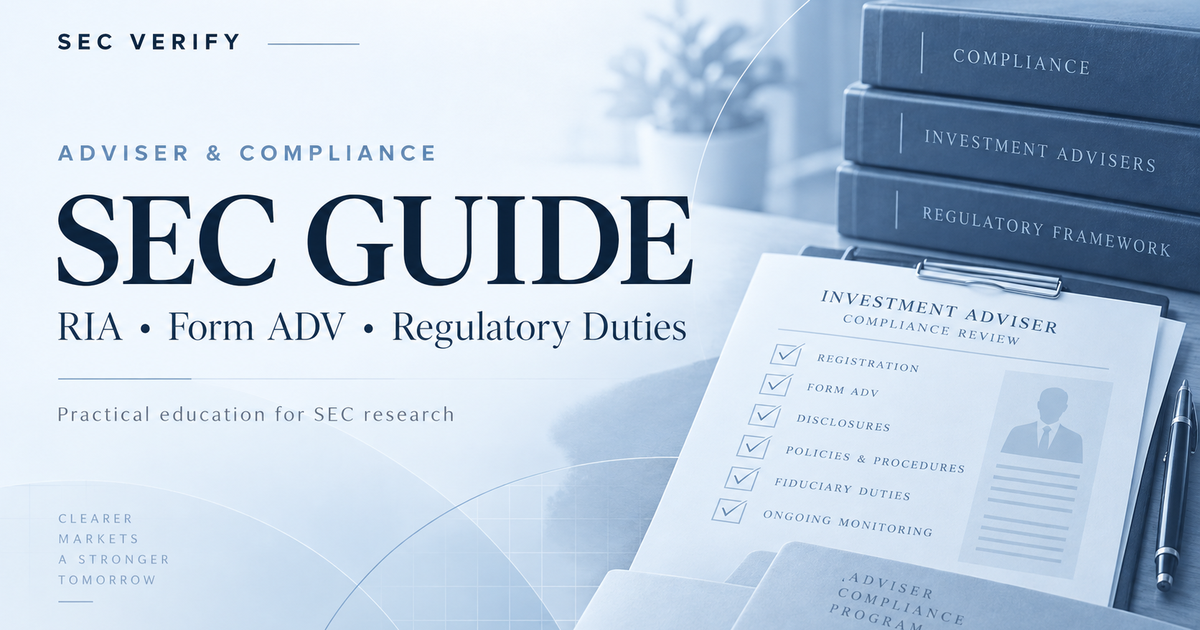
Accredited Investor vs Qualified Purchaser: Key Differences for Private Offerings and Private Funds
Accredited investor and qualified purchaser are two important eligibility standards in U.S. private securities markets, but they serve different legal purposes. An accredited investor standard is most often used in private offerings under Regulation D, while qualified purchaser status is mainly used for private funds r
Read guide →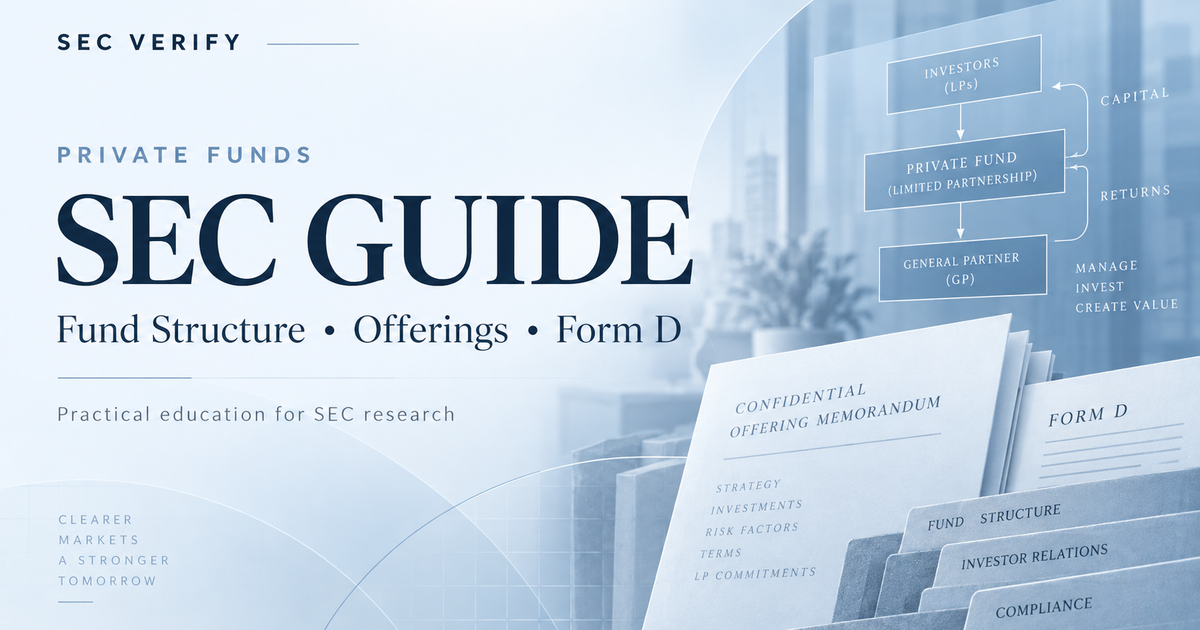
SEC Form CRS Explained: Client Relationship Summary for Investment Advisers and Brokers
TITLE: SEC Form CRS Explained: Client Relationship Summary for Investment Advisers and Brokers SEO DESCRIPTION: Learn what SEC Form CRS is, how it summarizes investment adviser and broker relationships, and what investors should check before opening an account. SEC Form CRS Explained: Client Relationship Summary for In
Read guide →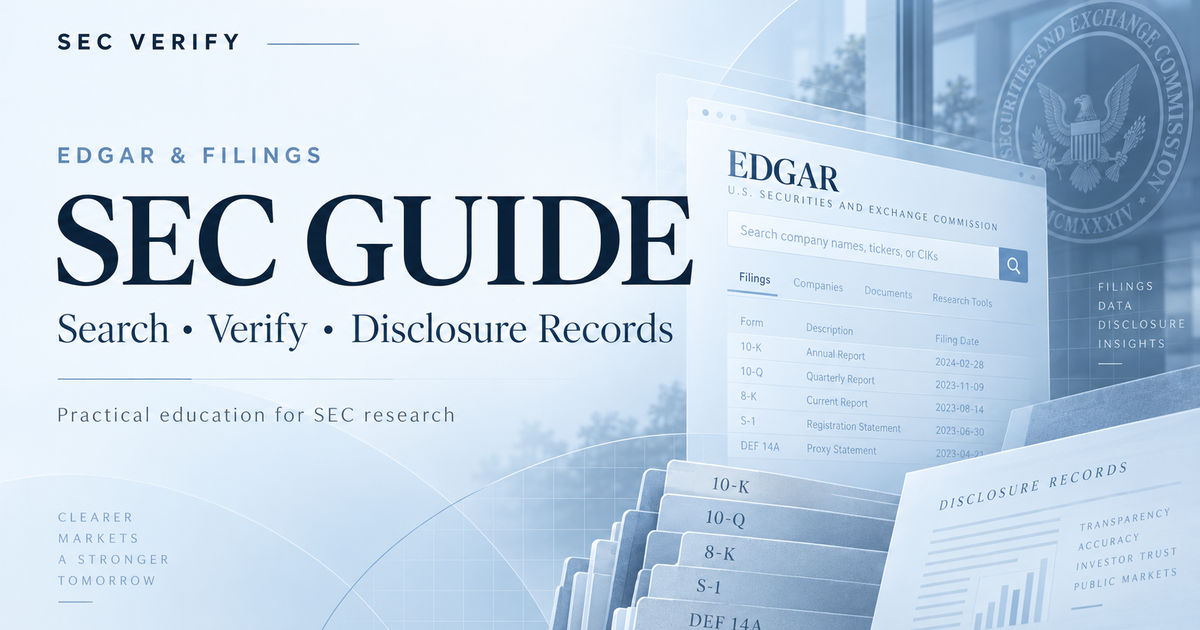
How to Read Investor Counts and Minimum Investment in Form D
TITLE: How to Read Investor Counts and Minimum Investment in Form D SEO DESCRIPTION: Learn what Form D reports about investor numbers and minimum investment, how to interpret accredited and non-accredited investor counts, and what these fields cannot confirm. Form D provides a limited snapshot of investors who had inve
Read guide →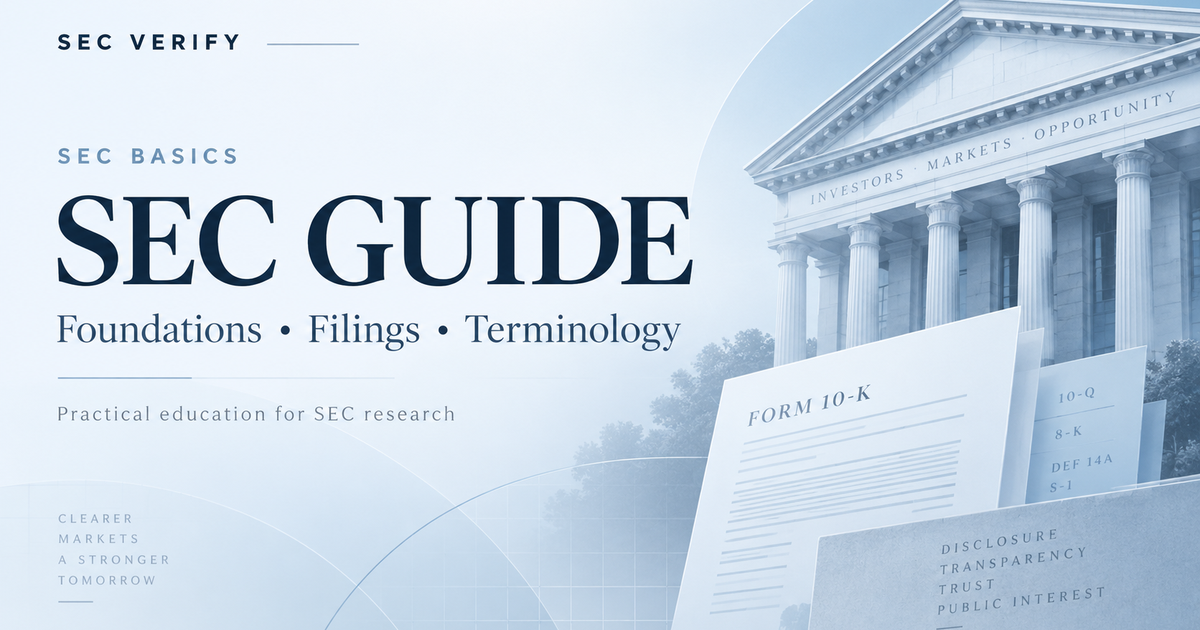
SEC Form ADV Part 2B Explained: Adviser Representatives, Background and Client-Facing Disclosures
TITLE: SEC Form ADV Part 2B Explained: Adviser Representatives, Background and Client-Facing Disclosures SEO DESCRIPTION: Learn what SEC Form ADV Part 2B discloses about investment adviser representatives, including education, business background, disciplinary history, compensation and supervision. SEC Form ADV Part 2B
Read guide →Restricted Securities vs Control Securities Explained: SEC Resale Rules and Investor Checks
Restricted securities and control securities are two important SEC concepts that affect whether shares, notes, warrants, options or other securities can be resold freely. They often appear in private placements, founder equity, employee stock plans, PIPE financings, merger consideration, venture investments and insider
Read guide →13F Confidential Treatment Requests Explained: When Institutional Holdings Are Delayed
TITLE: 13F Confidential Treatment Requests Explained: When Institutional Holdings Are Delayed SEO DESCRIPTION: Learn what SEC 13F confidential treatment requests are, why institutional managers may ask to delay public disclosure of certain holdings, and how investors should read amended 13F filings. 13F Confidential Tr
Read guide →Rule 144 Explained: Holding Periods, Affiliate Sales and Resale Limits
Rule 144 is a Securities Act safe harbor that helps determine when certain securities can be resold without filing a new registration statement. It is most often discussed in connection with restricted securities, control securities, private placements, employee equity, founder shares, PIPE transactions, and shares iss
Read guide →What “Yet to Occur” Means on SEC Form D
TITLE: What “Yet to Occur” Means on SEC Form D SEO DESCRIPTION: Learn what “Yet to Occur” means in Form D Item 7, how it relates to the first sale date, and what to check in later filings. When Form D says the first sale has “Yet to Occur,” the issuer is reporting that, as of the notice, no investor has yet become irre
Read guide →How to Compare a Fund Manager’s 13F Filings Across Quarters
TITLE: How to Compare a Fund Manager’s 13F Filings Across Quarters SEO DESCRIPTION: Learn how to compare SEC Form 13F filings across quarters, track institutional position changes, identify new holdings, and avoid common mistakes when reading delayed 13F data. How to Compare a Fund Manager’s 13F Filings Across Quarters
Read guide →Rule 144A Explained: Private Resales to Qualified Institutional Buyers
Rule 144A is a Securities Act safe harbor that allows certain restricted securities to be resold privately to qualified institutional buyers, often called QIBs. It is one of the most important rules in the institutional private capital market because it gives large financial institutions a way to trade securities that
Read guide →What SEC Form 13F Does Not Show: Shorts, Cash, Derivatives and Filing Delays
TITLE: What SEC Form 13F Does Not Show: Shorts, Cash, Derivatives and Filing Delays SEO DESCRIPTION: Learn the key limitations of SEC Form 13F filings, including why they do not show short positions, cash balances, real-time trades, cost basis or complete fund exposure. What SEC Form 13F Does Not Show: Shorts, Cash, De
Read guide →How to Read SEC Form 13F: Institutional Holdings and Key Limitations
TITLE: How to Read SEC Form 13F: Institutional Holdings and Key Limitations SEO DESCRIPTION: Learn how to read SEC Form 13F filings, what institutional holdings they disclose, how to compare positions across quarters, and what important information 13F reports do not show. How to Read SEC Form 13F: Institutional Holdin
Read guide →